September 23, 2024
From Nurse to Skincare Specialist: How Basic and Advanced Cosmetic Injection Training Can Enhance Your Career
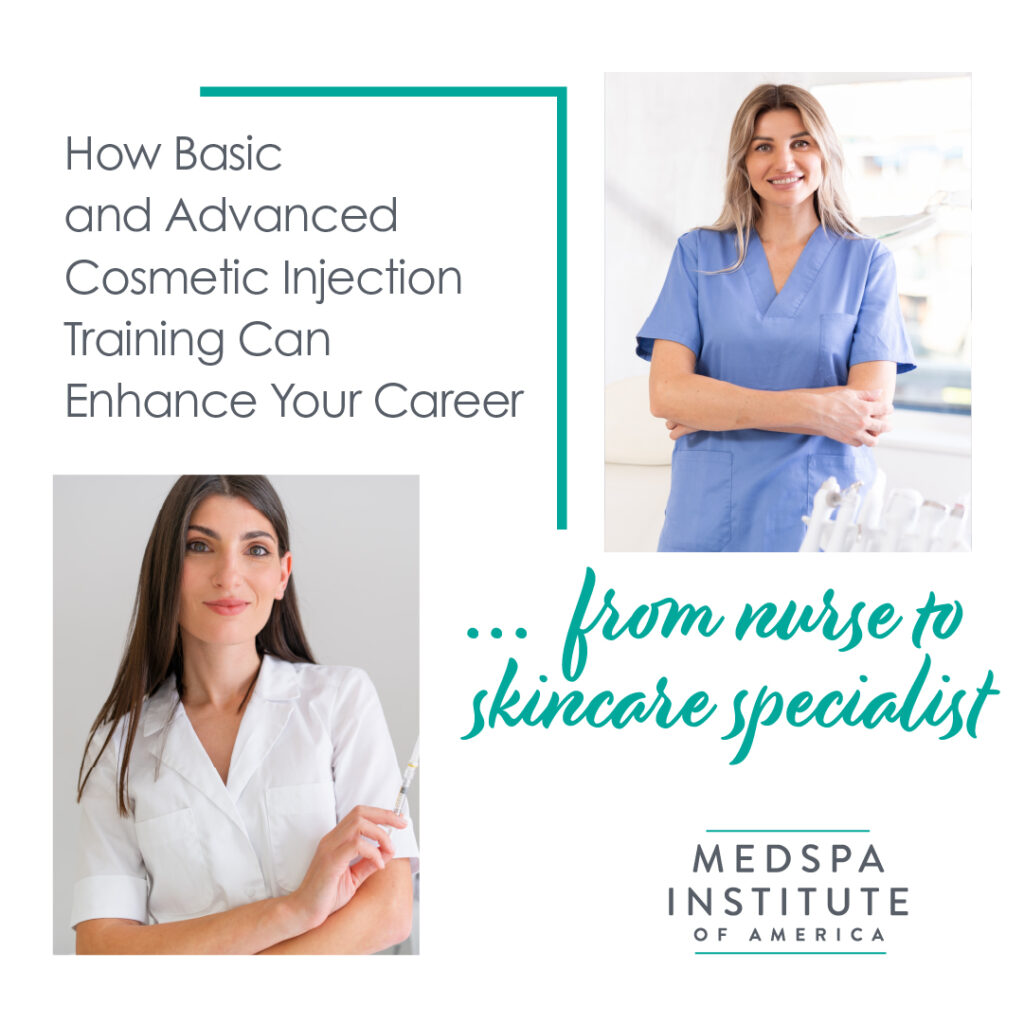
Basic and advanced cosmetic injection training can help eligible nurses and licensed healthcare professionals build specialized skills for medical aesthetics. With training in facial anatomy, patient assessment, injection techniques, safety protocols, and hands-on practice, nurses may be able to explore aesthetic roles in medspas, dermatology offices, plastic surgery practices, or similar settings.
For nurses interested in moving from traditional healthcare into cosmetic injectables, training can provide a foundation for services such as neurotoxins, dermal fillers, client consultations, treatment planning, and aftercare. Because injectable treatments are medical services, professionals should always confirm their scope of practice, state requirements, and any supervision rules before offering services.
At MedSpa Institute of America, eligible professionals can explore basic and advanced cosmetic injection training designed to support technical skill development and confidence in medical aesthetics. This guide explains how injection training can help nurses expand their knowledge and consider new paths in the aesthetics field.
Cosmetic Injection Training at a Glance
| Training Area | What It May Include |
|---|---|
| Licensure and Scope of Practice | Eligible professionals should confirm state requirements, supervision rules, and what their license allows before performing injectable services. |
| Basic Neurotoxin Training | Training may cover facial anatomy, patient assessment, treatment planning, safety protocols, and common treatment areas such as the glabella, forehead, and crow’s feet. |
| Basic Filler Training | Students may learn filler selection, facial balancing concepts, injection techniques, client consultation, and safety considerations. |
| Advanced Neurotoxin Training | Advanced training may introduce more specialized treatment areas and techniques for eligible professionals with foundational experience. |
| Advanced Filler Training | Advanced filler education may focus on more complex treatment planning, advanced facial areas, cannula techniques, and complication awareness. |
| Hands-On Practice | Supervised practice can help students build confidence, improve technique, and better understand client care in a professional setting. |
| Career Settings | Training may support future opportunities in medspas, dermatology offices, plastic surgery practices, or other medical aesthetics environments. |
The Appeal of a Career in Medical Esthetics
1. Expanding Career Opportunities
The esthetics industry offers numerous opportunities for registered nurses (RNs) and nurse practitioners (NPs) looking to diversify their careers. Unlike traditional nursing roles that often involve long hours and high-stress environments, medical esthetics provides a different work atmosphere that is more focused on patient wellness and satisfaction. This career path may allow nurses to use their skills in a client-focused setting within medical aesthetics.
2. Expanded Professional Opportunities
One potential benefit of cosmetic injection training is the ability to expand your professional skill set. With basic and advanced injection training, eligible nurses may be able to explore opportunities in medspas, dermatology clinics, plastic surgery offices, or other medical aesthetics settings, depending on licensure, experience, and state requirements.
3. Flexibility and Autonomy
Working in medical esthetics often offers more flexibility compared to traditional nursing roles. Many esthetic nurses operate on a freelance or contract basis, giving them the autonomy to set their schedules. This flexibility can provide a better work-life balance, a significant advantage for those looking to spend more time with family or pursue other interests.
4. Fulfilling Work
Helping people feel confident and beautiful is inherently fulfilling. Nurses transitioning to skincare specialists can find satisfaction in enhancing clients’ natural beauty and boosting their self-esteem. The positive, client-focused nature of the work can be a refreshing change from the high-pressure environments of hospitals and clinics.
What is Cosmetic Injection Training?
Cosmetic injection training involves learning how to perform injectable procedures such as Botox, dermal fillers, and other neuromodulators. These procedures are in high demand due to their ability to provide quick, non-invasive beauty enhancements with little to no downtime. Training programs typically cover:
- Anatomy and Physiology: Understanding the structure of the face and underlying muscles is crucial for safe and effective injections.
- Techniques for Injecting: Different types of fillers and Botox require different injection techniques. Training ensures precision and safety.
- Patient Assessment: Knowing how to assess a patient’s needs and suitability for certain procedures is key to successful outcomes.
- Complication Management: Nurses must be prepared to manage any adverse reactions or complications that may arise during or after a procedure.
Levels of Cosmetic Injection Training
There are two levels of training for nurses looking to specialize in cosmetic injections: beginner training and advanced training.
Beginner Cosmetic Injection Training
Beginner training introduces the fundamentals of neurotoxin (e.g., Botox) and filler injections:
- Neurotoxins Class
- Curriculum: Didactics, anatomy assessments, and hands-on training for areas like the glabella, forehead, and crow’s feet.
- Certification: Injections, HIPAA, Biohazards.
- Filler Class
- Curriculum: Didactics, filler selection, and hands-on practice for the upper, mid, and lower face, including lip enhancements and filler reversal.
- Certification: Injections, HIPAA, Biohazards.
These courses provide a solid foundation, allowing nurses to perform basic esthetic procedures confidently.
Advanced Cosmetic Injection Training
Advanced training builds on basic skills, focusing on more specialized techniques:
- Advanced Neurotoxin Class
- Curriculum: Didactics, anatomy assessments, and hands-on training for areas like the masseter, chin, under-eye, underarms, and brow lift.
- Certification: Injections, HIPAA, Biohazards.
- Advanced Filler Class
- Curriculum: Didactics, advanced filler techniques, hands-on practice for temples, tear troughs, jawline, and cannula needle techniques.
- Certification: Injections, HIPAA, Biohazards.
Advanced courses enable nurses to offer more specialized services, enhancing their skills and expanding their career opportunities in medical esthetics.
How to Get Started
If you’re a nurse considering a career transition into medical esthetics, the path is straightforward. Here are the steps to get started:
1. Research Training Programs
Look for programs that offer comprehensive training in both basic and advanced cosmetic injections. Ensure the program is reputable and provides hands-on experience.
2. Ensure Proper Licensing and Certification
Before beginning training, check the licensing requirements for esthetic practice in your state. Ensure that the training program meets these requirements and will provide you with the necessary certification to practice.
3. Enroll in Training
Choose a training program that aligns with your career goals. You can start with basic classes to learn the fundamentals of neurotoxins and fillers or jump directly into advanced courses if you already have experience and want to specialize in more complex techniques. Select the path that best suits your current skill level and career aspirations, allowing you to either build a solid foundation or enhance your expertise.
4. Gain Experience
Begin practicing in a clinical setting under supervision to gain real-world experience. This can help you refine your skills and build a portfolio of successful cases.
5. Market Your Services
Utilize social media, professional networks, and word of mouth to promote your new services. A strong online presence and positive reviews can attract a steady stream of clients.
Ready To Get Started?
Transitioning from nursing to a career in cosmetic injections can be a highly rewarding career move. Nurses already possess many of the skills needed to excel in this field, such as patient care, anatomy knowledge, and a detail-oriented approach. By investing in either basic or advanced cosmetic injection training, nurses can unlock a world of opportunity in the esthetics industry.
At MedSpa Institute, we are committed to providing the highest level of training to help nurses make this career transition. Whether you are just starting or looking to advance your skills, our programs are designed to set you up for success in the booming field of medical esthetics.
For more information, contact us today!
Leave a Reply