October 13, 2026
How to Become a Laser Technician
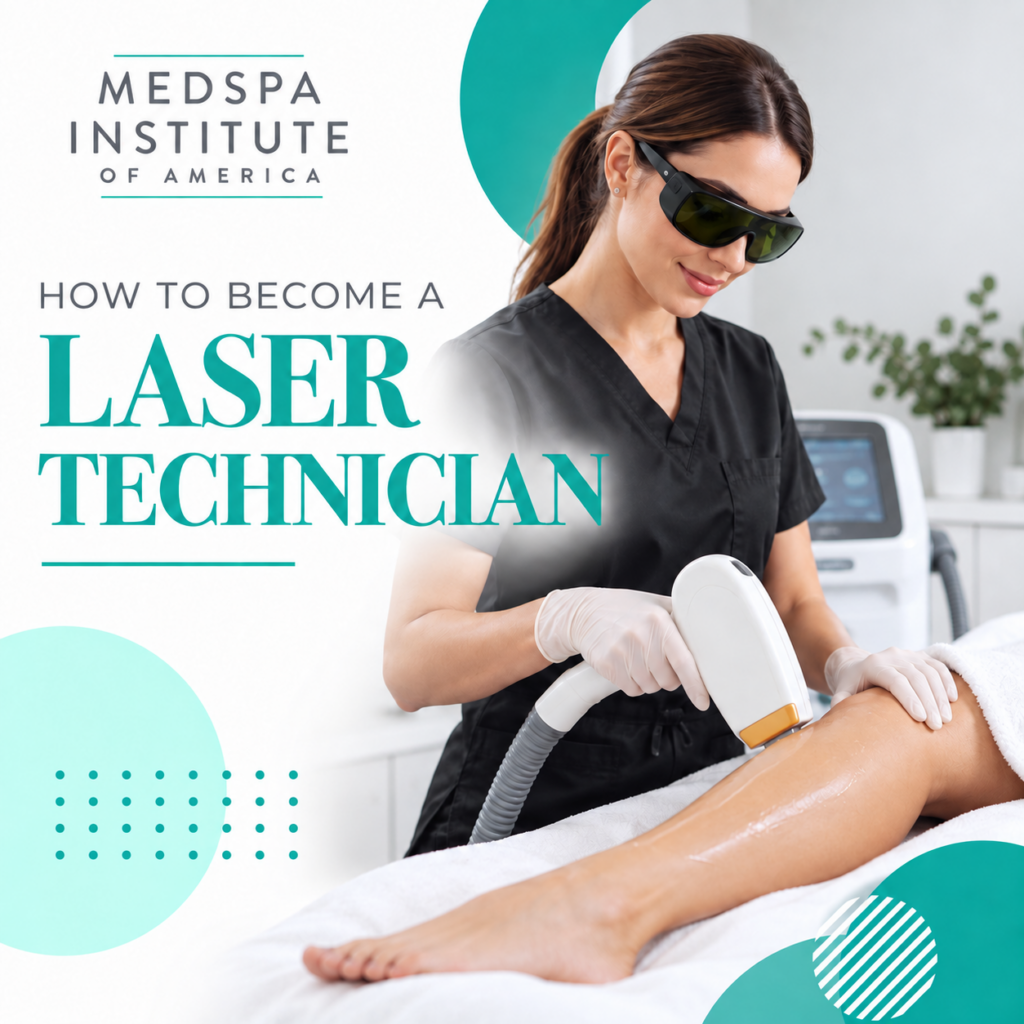
If you’re interested in skincare, technology, and helping clients feel confident, becoming a laser technician could be an exciting next step. Laser technicians use specialized equipment to perform services such as laser hair reduction, tattoo removal, skin resurfacing, and treatments for certain pigmentation or vascular concerns.
The path usually includes researching the requirements where you plan to work, completing laser safety and technical education, gaining hands-on experience, and earning a certification from your training program. Because laser services are regulated differently across the country, your exact path will depend on your state, employer, and the treatments you want to perform.
At Medspa Institute of America, we help students build their laser knowledge while gaining experience with technology used in the medical aesthetics industry. Whether you’re starting a new career or adding to your current skincare education, here’s what the path can look like.
What Does a Laser Technician Do?
A laser technician works with laser and energy-based devices to help clients address a variety of aesthetic concerns. The exact services a technician can provide depend on their education, workplace, available medical supervision, and state regulations.
A laser technician’s responsibilities may include:
- Meeting with clients before treatment
- Reviewing medical histories and possible contraindications
- Explaining what clients can expect during a service
- Preparing the treatment area and equipment
- Following safety and sanitation protocols
- Monitoring the skin throughout treatment
- Recording treatment settings and client responses
- Providing pre-treatment and aftercare instructions
The role involves more than learning how to operate a machine. A capable technician also needs to understand the skin, communicate clearly, follow detailed protocols, and recognize when a treatment may not be right for a client.
How to Become a Laser Technician in 7 Steps
1. Research the Requirements Where You Plan to Work
Before enrolling in a program, find out how laser services are regulated in your state. There isn’t one national laser technician license that allows someone to practice everywhere. Requirements may also differ depending on the device, treatment, and workplace.
In Minnesota, laser treatments aren’t included in the standard scope of advanced practice esthetics. The state’s administrative rules specify, “Laser, as identified in Minnesota Statutes, section 147.081, subdivision 3, as the practice of medicine is not an advanced practice esthetic service.”
This doesn’t mean someone without a medical degree can’t pursue laser education. It does mean that completing a laser program doesn’t automatically give you unlimited authority to perform every service independently. After graduation, you’ll still need to follow current state requirements, workplace protocols, and any required medical supervision.
Because regulations can change, it’s important to confirm the latest requirements with the appropriate state cosmetology and medical boards.
2. Think About Your Starting Point and Career Goals
Our students come to laser education with different backgrounds. Some are licensed estheticians who want to add more technical knowledge to their education. Others are new to the beauty industry and interested in pursuing a more clinical career.
Before choosing a program, think about what you’d like your future work to include:
- Do you want to focus mainly on laser services?
- Would you also like to offer traditional esthetics services?
- Are you interested in working in a medspa or clinical setting?
- Do you eventually want to study advanced practice esthetics?
- Which laser treatments interest you most?
You don’t need to have your entire career mapped out before starting. However, thinking about your goals can help you choose the right program or combination of programs.
Esthetics education provides a broader foundation in skincare, facials, waxing, makeup, and client care. Advanced practice esthetics explores additional clinical skincare techniques. Laser training focuses more closely on laser technology, equipment safety, and treatment protocols.
3. Choose the Right Laser Training Program
A laser certification program should balance technical knowledge with supervised practice. Online lessons can help you understand the theory, but developing confidence with laser equipment requires hands-on experience.
When choosing a program, ask about:
- The total number of training hours
- How much hands-on practice is included
- The types of devices students can work with
- Class sizes
- Instructor experience
- Laser safety education
- Client consultation training
- Internship or clinic requirements
- Career preparation
- Scheduling options
- Admission requirements
It’s also helpful to tour the school. You’ll get to see the learning environment, ask questions, and learn more about how your education will work from day to day.
4. Learn the Science and Safety Behind Laser Treatments
Laser education starts with understanding how the technology interacts with the skin. Different devices, wavelengths, and settings are designed for different goals. A treatment that’s appropriate for one client may not be suitable for another.
Your education may cover topics such as:
- Laser and light-based technology
- Skin anatomy
- Skin types and tones
- Treatment indications
- Contraindications
- Client health history
- Eye protection
- Equipment settings
- Treatment preparation
- Sanitation and infection control
- Possible skin reactions
- Post-treatment care
This foundation helps you understand why a treatment is performed a certain way instead of only memorizing the steps. It can also prepare you to make safer decisions, communicate with clients, and follow the protocols established by your future workplace.
5. Gain Hands-On Experience With Laser Technology
Once you understand the theory, hands-on training gives you the chance to put that knowledge into practice. Working with equipment under supervision can help you become more comfortable with machine setup, client positioning, treatment techniques, and documentation.
Depending on the program and available technology, you may explore services related to:
- Laser hair reduction
- Tattoo removal
- Skin tightening
- Skin resurfacing
- Age spots and pigmentation
- Visible vascular concerns
- Broken capillaries
- Rosacea-related redness
- Stretch marks
- Scarring
- Melasma
Technology continues to change as the medical aesthetics industry evolves. Instead of learning only one machine, look for an education that introduces you to different devices and teaches you the principles behind the technology. This can make it easier to continue building your skills throughout your career.
6. Complete Your Program and Earn Your Certification
After completing your required classroom instruction, hands-on training, and assessments, you can earn a certificate from your school. This shows potential employers that you’ve completed a defined laser education program.
Keep copies of your:
- Certificate
- Completed training hours
- Practical quotas
- Internship records
- Equipment-specific training
- Laser safety education
- CPR or other related credentials
Remember that school certification and state licensure aren’t the same. Your certificate documents your education. The services you can perform will still depend on current regulations, workplace policies, and any required supervision.
7. Prepare for Your First Laser Technician Position
Laser technicians may pursue opportunities in medspas, cosmetic clinics, dermatology practices, plastic surgery offices, and other environments that offer aesthetic treatments.
When creating your resume, include more than the name of your program. List the technologies you studied, services you practiced, completed training hours, and internship experience. Employers may also want to see that you can communicate professionally, follow safety procedures, and help clients feel comfortable.
During an interview, be prepared to discuss:
- How you screen a client before treatment
- Why contraindications matter
- What you’d do if you noticed an unexpected skin response
- What you include in an aftercare conversation
- How you maintain accurate treatment records
- Why continued education matters
A strong laser technician combines technical ability with professionalism, attention to detail, and genuine client care.
How Long Does It Take to Become a Laser Technician?
Your timeline will depend on the program you choose, the schedule available, and whether you plan to complete esthetics or advanced practice esthetics education in addition to laser training.
Our 150-hour Luxury Laser Program offers two learning options. You can choose our in-person weekday course or a hybrid option that combines remote theory education with on-campus hands-on training. You’ll also complete a four-month internship designed to help you continue building practical experience.
If you pursue laser certification as a standalone program, your path may be shorter than the path of someone completing multiple areas of skincare education. However, combining laser training with esthetics or advanced practice esthetics can help you build a more versatile foundation for the medical aesthetics industry.
When comparing programs, don’t focus only on how quickly you can finish. Consider how much supervised practice, equipment exposure, and career preparation you’ll receive along the way.
What Skills Can Help You Succeed?
Laser technicians work with sophisticated equipment, but technical knowledge is only one part of the job. The following qualities can also make a difference in your career.
Attention to Detail
Small differences in a client’s skin, health history, or treatment response matter. Technicians need to follow protocols carefully and document treatments accurately.
Clear Communication
Clients may be unfamiliar with laser services or nervous about treatment. Explaining the process, expected sensations, and aftercare in simple language can help them feel informed and comfortable.
Commitment to Safety
A responsible technician doesn’t rush through screening or ignore a possible contraindication. Safety should guide every part of the treatment process.
Professionalism
Medical aesthetics can involve sensitive concerns and personal information. Clients need to know they’ll be treated with respect, discretion, and care.
Willingness to Keep Learning
Devices, techniques, and industry standards continue to evolve. Staying open to continued education can help you grow your knowledge and become more comfortable with new technology.
Begin Your Laser Education With Us
Becoming a laser technician can open the door to a more technical and clinical side of skincare. With the right education, you can learn the science behind laser technology, build hands-on skills, and prepare to work with clients in a professional setting.
In our Luxury Laser Program, you’ll gain exposure to multiple laser and energy-based technologies instead of focusing on only one machine or treatment. We also include career-focused support, such as internship experience, Beauty as a Business education, and mock interview preparation with a professional career advisor.
You can complete laser training before or after pursuing esthetics or advanced practice esthetics education. Our team can help you explore your options and decide which path makes the most sense for your experience and career goals.
Are you ready to see what laser education could look like for you? Contact us to request more information or schedule a tour of our Bloomington, Minnesota campus.
Frequently Asked Questions About Becoming a Laser Technician
Do I need a medical degree to study laser technology?
You may be able to enroll in laser training without being a physician or nurse. However, the services you can legally perform after graduation will depend on state regulations, the treatment being provided, and the supervision available at your workplace. Cosmetic injection services have separate education and professional requirements.
Are all clients treated with the same laser settings?
No. The appropriate technology and settings can depend on the client’s skin type, treatment area, health history, previous response, and desired outcome. This is why skin education, client screening, and supervised practice are important parts of laser training.
What’s the Difference Between a Laser and an IPL Device?
A laser uses a focused wavelength of light, while intense pulsed light, or IPL, uses a broader range of light. These technologies can have different applications, settings, and safety considerations. Training should help you understand the equipment you’re using and why it may be selected for a particular client.
What Should I Ask a Potential Employer Before Accepting a Position?
Ask which devices you’ll use, what services you’ll perform, how new technicians are trained, and who provides medical oversight. You should also understand the clinic’s safety procedures, documentation standards, emergency protocols, and expectations for continued education.
Will I Need Additional Training When I Begin Working?
Possibly. Employers may require training on their specific devices, treatment protocols, documentation systems, or safety procedures. This workplace training builds on your foundational education and helps you learn how that particular clinic operates.
Leave a Reply